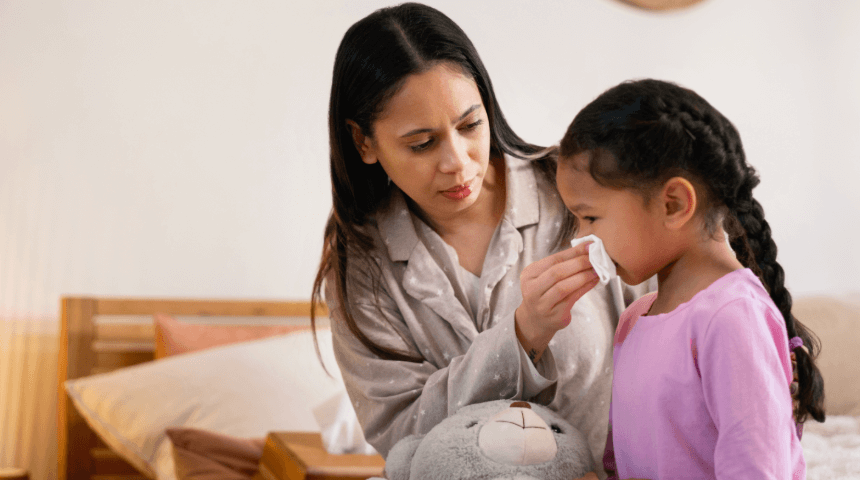
As a parent, it’s natural to worry when your child gets sick. But understanding how infections affect the immune system – and that they can actually keep your child healthier later on – can help ease your concerns.
But first things first: You should never skip your child’s vaccinations.
Your Child’s Immune Memory
Early childhood infections contribute to the development of the immune system. When your child has an infection, it triggers reactions in their body that allow it to learn about the invading microbe. This process enables your child’s immune system to build an army of cells and antibodies to fight off the infection. This is known as the immune response. The cells and antibodies remain in standby mode indefinitely in your child’s body in case of future infections. This is the basis for immunizations, where exposure to parts or whole microbes trains the immune system to recognize and respond swiftly when the real pathogen appears.
To create effective vaccines for each year, there is an ongoing review of the most recent scientific data for each of the recommended vaccines and other immunizations. This information is used by top disease experts to update the recommended child and adolescent immunization schedule, which is approved by the American Academy of Pediatrics, the Centers for Disease Control and Prevention and other healthcare organizations.
The Hygiene Hypothesis
Beginning in the 1960s through the 1980s, epidemiologists observed that children raised in rural environments were less likely to develop allergic conditions, such as asthma, compared to those in urban settings. Their exposure to less sanitary conditions appeared to shape the immune system into a more active, attacking mode that was seen as protective and better able to fight infections and prevent the development of allergy and autoimmune conditions. This concept was called the hygiene hypothesis.
Because people and infectious microbes have coexisted throughout history, the modern drive to eliminate all pathogens may not be entirely beneficial. Over-sanitized environments could inadvertently hinder the natural development of a robust and balanced immune system.
Living with Germs
About two decades ago, scientists started getting interested in how our microbiome connects to the way our immune system develops and stays balanced. Now, powerful new molecular tools have revolutionized the way the microbiome is studied. We’re learning how different foods can alter the bacteria in our gut and how those changes might affect our health. Even vaccines and antibiotics can temporarily disrupt this delicate microbial community.
Choosing Healthy Nutrition
Nutrition plays an integral role in the development and function of the immune system. When your child does not eat a healthy diet, there are energy or specific nutrient deficiencies that keep the immune system from functioning correctly. So it’s important to feed your child a balanced diet that includes fruits, vegetables, lean proteins and healthy fats.
The spotlight also is increasingly on how ultra-processed foods and food additives affect gut health and preservation of the microbiome. Ultra-processed foods that you should limit in your child’s diet are ready to eat, highly palatable and with a long list of ingredients. The most commonly consumed ultra-processed foods include:
- Soft drinks and sweetened beverages
- Processed bread
- Refined breakfast cereals
- Bakery products
- Pre-packaged sauces
- Ready-to-heat meals
- Processed meats
Many studies now are focused on the microbiome, and we are gaining a wealth of new information to help us stay well.
This content is not AI generated.

Are you interested in learning more?
Sign up for our e-newsletter for more tips and best practices from pediatricians.
Sign Up Here
 Top Pediatrician Tips for Keeping Kids Safe