



FAQ
Extracorporeal Membrane Oxygenation (ECMO)
What Is ECMO?
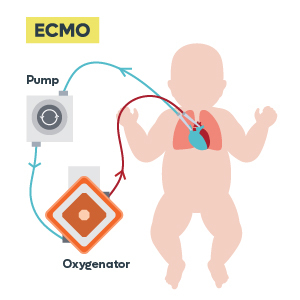
Extracorporeal Membrane Oxygenation (ECMO) is an advanced therapy that helps the body by adding oxygen and removing carbon dioxide from the blood, then circulating blood throughout the body – much like the heart and lungs do. This process happens outside the body using a machine, which is why it’s sometimes called extracorporeal (outside the body) life support (ECLS).
While it is like a heart-lung machine used for short periods during open heart surgeries, ECMO differs in that it can be used for days or weeks. It temporarily takes over the work of the heart and lungs, giving these organs a chance to rest and heal. ECMO doesn’t cure heart or lung problems but provides critical support while the body recovers.
How Does ECMO Work?
To put a patient on the ECMO system a surgeon inserts plastic tubes called cannulas into veins or arteries in the neck, groin or chest. After these cannulas are confirmed to be in the correct location, they are connected to the ECMO system. The ECMO pump takes blood out of the body through one of these cannulas and pushes the blood through an artificial lung. This artificial lung is called an oxygenator. The oxygenator removes carbon dioxide from the blood, adds oxygen and then warms the blood before returning it to the body through a return cannula.
By assisting the heart and lungs, ECMO allows doctors to lower ventilator settings, reducing stress on the heart and lungs. Medications supporting the heart and lungs may also be reduced during ECMO.
Who Needs ECMO?
At Orlando Health Arnold Palmer Medical Center (Orlando Health Children's Arnold Palmer Hospital and Winnie Palmer Hospital for Women & Babies), ECMO is available for patients of all ages, including infants, children and adults, who suffer from severe heart or lung illnesses. Conditions that may be supported with ECMO include:
- Pulmonary hypertension (high blood pressure in the lungs)
- Congenital diaphragmatic hernia
- Heart failure (including cases caused by congenital heart defects)
- Pneumonia
- Acute respiratory distress syndrome (ARDS)
- Sepsis
- Respiratory or cardiac failure secondary to trauma
- As a bridge to a ventricular assist device or organ transplant
Not all patients are candidates for ECMO. A team of providers carefully review each case to determine whether ECMO is the most appropriate option for that patient’s condition.