



All Search Results
-
5 easy things you can do to give your kids healthy teeth
So it’s happening. Your six-month-old baby is crying nonstop, and you finally found the reason: they have their first tooth! But what now? Everyone knows we’re supposed to brush our teeth. But when do you start teaching your child to brush? How often should your kids brush? What happens when they don’t take care of their teeth?
-
Get to know Dr. Patricia Wheeler, pediatric geneticist at Arnold Palmer Hospital
You could say that a pediatric geneticist is a modern-day Sherlock Holmes, working to solve the mystery of a child’s medical condition. Geneticists work with families to help determine whether a child’s illness could be caused by a change in a child’s DNA, the hereditary material that carries a person’s genetic information. Accompanied by a team of professionals, a geneticist also helps figure out whether this disorder is likely to be passed on to future generations and helps patients and families seek the best care for their condition. Some common inherited disorders that geneticists diagnose include autism, neurofibromatosis, Down syndrome, sickle cell disease and many more.
-
One easy thing you can do to help prevent ear infections
Ear infections are one of the most common medical problems children experience within the first three years of life. They are upsetting and painful for the child, and they often result in frustration and sleepless nights for the whole family. In other words, parents would prefer to avoid ear infections if at all possible.
-
What can kids do to help when disasters like Hurricane Harvey hit?
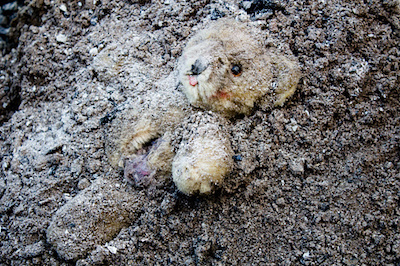 Many relief organizations are asking for monetary donations and usable donated items for those that have been displaced from their homes. Kids can take up cash collections, whether they do this at school or with their family members. That cash can be turned into a check designated to a reputable charitable organization. Kids can also go through their own clothes, books, and toys and set items aside that can be used by children that have been impacted directly by the storm. Many agencies are asking for monetary donations in lieu of “stuff” at the moment, but there will come a time soon where families will need things. Parents can help kids by sorting and organizing items that can be donated, finding appropriate organizations for the donations, and sending them off when the time is right.
 -
So you have a child that isn’t talking yet. What should you do?
As a pediatric Speech-Language Pathologist, I see children with a variety of speech and language disorders. One of the most common is what is known as expressive language delay, which is when a child is not using the vocabulary and phrase/sentence length that is appropriate for their age. Although there can be specific medical reasons for the delay, it can also happen with no other diagnosis. For those kids who seem to understand everything but are not communicating at their age level, I encourage parents to work on building their child’s “intent to communicate.”
-
Is your child constipated? How to tell and what to do about it
Learn about a few things every parent should know about constipation in kids.
-
DJ: President of the Orlando Health Arnold Palmer Hospital for Children Teen Leadership Council
DJ doesn’t remember much of what happened right after the hard tackle that caused his life-changing injury. He does remember the numbness when he woke up at Orlando Health Arnold Palmer Hospital for Children on July 25, 2017.
 Just 16 years old at the time, the injury occurred while he and his teammates on the South Lake High School football team were participating in summer scrimmages, preparing for the upcoming season. A short time later, he was in a hospital bed, unable to move from the neck down.
 -
How do we talk to our kids in the aftermath of tragedy?
It’s hard to know what to say to each other, ourselves, but especially, our children. Once again, we all woke up to news that there was a horrific mass shooting- and for those of us in Central Florida, it was reminder of what previously took place right in our own backyard.
-
How do you cope with a debilitating and invisible chronic illness?
How do you cope with having a debilitating invisible chronic illness, like Gastroparesis? When I was first diagnosed with Gastroparesis, I honestly didn’t know how to feel. It was like I was on a rollercoaster of emotions - accepting one day, and completely confused the next. I later came to the realization that those feelings are completely normal.
-
How do you teach a child to be kind, caring and compassionate?
Working as a child life specialist has granted me a front row seat to some of life's most challenging, defining, and intimate moments for the kids I serve. In partnering with children and families, we work to empower and encourage positive coping skills and help them make meaning from the obstacles they have been presented. And through this, I am always left with a chance for meaning-making of my own. Lately, I have been reflecting on the concept of empathy and its importance not only within the lives of those affected by medical challenges, but as a basic skill needed between all people.