All Search Results
-
Teens are juuling at school and parents are clueless about it
Have you heard your teen mention “juuling” or something called a “Juul”? Perhaps you thought it was some new slang term your
-
A simple change you can make if you're concerned about your child's weight
Here are some ways to prevent portion distortion and keep portions in check.
-
What every parent should know about teens and tanning
As the weather continues to warm and school draws to a close, teens will be heading outdoors for fun in the sun. Whether it’s a day by the pool, sunbathing at the beach, playing sports or surfing the waves, we encourage our kids to enjoy those fleeting moments of adolescent summer freedom that we adults remember fondly.
-
What every parent should know about teens and tanning
Most adults don’t fully understand the risks of sun damage, so it’s hardly reasonable to expect our kids to grasp this without help.
-
Car Seat Safety – 5 Tips to Keep Children Safe
There are few things in parenting as complicated as the rules and regulations of car seats. And yet, there are few things as important for the safety and well-being of our kids.
-
Why You Shouldn’t Give Aspirin to Your Child
You may have heard your pediatrician say that you shouldn’t treat your child with over-the-counter aspirin products. And if you haven’t, here’s your friendly reminder: aspirin and aspirin-containing products should not be given to children or adolescents unless under specific direction from your doctor.
-
The Dangers of Falling Furniture in Your Home
Did you know that every 24 minutes a child in the United States is injured by a television or piece of furniture that falls on them?
-
What is music therapy and how is it used in a hospital?
I am a music therapist in a pediatric hospital and a hospital for women and babies. That is often what I say when I’m asked my occupation by friends and family. While most people generally understand what goes on in a hospital, it can be difficult to conceptualize what music therapy is and how it functions in the medical setting. Follow-up questions and comments from those unfamiliar with music therapy often include: “I didn’t know that was a thing” and “So you play music for patients in the hospital?” My answer is yes, it is a thing, but it is so much more than just playing music for hospitalized individuals.
-
What Every Parent Should Know About AFM
If you've been paying attention to the national news lately, you may have noticed that there has been a record number of AFM cases across the nation in 2018. AFM, which stands for acute flaccid myelitis, is a polio-like disease that causes sudden weakness in the arms and legs, along with a loss of muscle tone, and typically affects children.
-
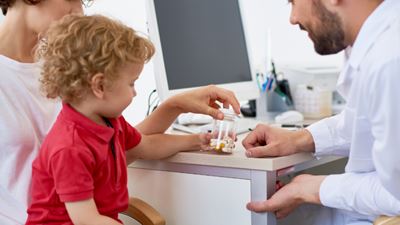
Teaching Your Child to Swallow Pills
It seems like a no-brainer – just pop the pill in your mouth and swallow. It’s easy to forget, though, that swallowing a pill is something that must be learned. It may feel normal and natural to us grown-ups, but it’s not normal or natural for kids. For children who need to take medications, either for an unexpected illness or a long-term condition, this seemingly small issue can produce a lot of anxiety, making it a big issue. If you’ve ever sat on your kitchen floor with a kid screaming “I can’t do it!”, you know what I mean.