



All Search Results
-
Orlando Health Treats First Pediatric Patient using Proton Therapy
ORLANDO, FL. (May 26, 2016) – When Zayne Burton’s parents, Lori and Chaz, heard the diagnosis that their 12-year-old son had a medullablastoma, a tumor of the brain and spine, they were in shock. Quickly, however, their focus turned to treating the curable cancer so their son could go on to live a healthy life. Their journey brought them to The Marjorie and Leonard Williams Center for Proton Therapy at UF Health Cancer Center - Orlando Health, which had just opened, becoming the first proton center in Central Florida to treat patients us-ing proton beams, a type of radiation therapy, to shrink tumors. Just weeks after his diagnosis and surgery to remove the tumor, Zayne, a 7th grader from Orlando, began proton therapy treatment at UF Health Cancer Center - Orlando Health, becoming the first pediatric patient treated in Central Florida with this revolutionary treatment option.
-
Our Team
-
How to prevent accidental poisoning in your home
One million children in the U.S. under the age of six years will suffer from some type of poisoning this year. Exposure to toxic substances can occur in the home, at school, at a grandparent’s or friend’s house- anywhere your little ones can roam. These unfortunate events tend to happen when a parent or caregiver is with a child, but not necessarily paying close attention.
-
What’s all the fuss about the flu?
Unless you’ve been hiding under a rock somewhere, you’ve probably seen a lot of coverage lately on television and online news about the flu. We hear so much about it each year that often it’s tempting to brush that information aside.
-
How do you choose which hospital is best equipped to care for your family?
All it takes is a drive down Interstate 4 to get a glimpse of the healthcare landscape in Central Florida. You’ll see a variety of billboards that boast the expertise of different hospitals, urgent care facilities and medical practices. Sometimes it feels like everywhere you look somebody is trying to sell you some kind of health-related product or service.
-
Is it safe for your baby to wear jewelry?
It’s not uncommon to see infants and small children adorned with various types of jewelry. Parents may choose for their child to wear amber necklaces used to help with teething or earrings, bracelets and anklets worn for cultural or aesthetic purposes.
-
When Should You Start Feeding Your Baby Solid Foods?
Wondering when it’s time to start adding solid foods to your baby’s diet? While the American Academy of Pediatrics recommends that you wait to feed your baby anything besides breast milk or formula until the age of 6 months, every baby is different. Once your baby is ready to dig into some mashed sweet potatoes, peas and applesauce, here are a few tips to consider.
-
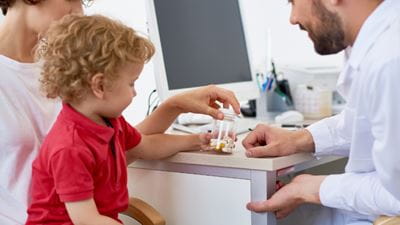
Teaching Your Child to Swallow Pills
It seems like a no-brainer – just pop the pill in your mouth and swallow. It’s easy to forget, though, that swallowing a pill is something that must be learned. It may feel normal and natural to us grown-ups, but it’s not normal or natural for kids. For children who need to take medications, either for an unexpected illness or a long-term condition, this seemingly small issue can produce a lot of anxiety, making it a big issue. If you’ve ever sat on your kitchen floor with a kid screaming “I can’t do it!”, you know what I mean.
-
If your child has been diagnosed with cleft lip or palate, here’s what you need to know
You may be surprised to learn that cleft lip and cleft palate are among the most common birth defects in children born in the United States, occurring in about one in every 600 to 700 births. The good news for families who find themselves faced with a diagnosis is this- while a cleft lip or palate requires ongoing medical care throughout childhood and into adulthood, the condition is highly treatable and children go on to lead normal, healthy lives.
-
On Mother's Day, what to say to parents who've lost a child
There are certain holidays that can feel like tiptoeing over landmines, and Mother’s and Father’s Day can be that way for some of us. For a perfectly intact family it may be nothing but joyful, but for those of us who have endured loss and heartache, that happiness is often tempered by a sense of sadness and grief. I lost my father as a teenager, and even now nearly twenty years later the day set aside to celebrate fathers is always bittersweet for me. I rejoice in the celebration of my husband with my children, but underneath I always feel the loss of my own father. My loss feels even heavier as I scroll through Facebook and see smiling photo after smiling photo posted of other people with their fathers. I’ll never have a picture of my Dad walking me down the aisle to get married; he wasn’t there. I’ll never have a photo of him with his grandchildren; he didn’t live to meet them. The knowledge of these things is a dull ache that has gotten better with time, but never really goes away.