


All Search Results
-
Ways to keep your baby safe from Sudden Infant Death Syndrome (SIDS)
As a physician, it is always hard to explain to new parents that their perfectly healthy newborn could potentially go to sleep and not wake up, and no one can explain why. Sudden Infant Death Syndrome, also known as SIDS, is the sudden and unexplained death of a baby younger than 1 year old. It is sometimes referred to as “crib death” because it often occurs during sleep. SIDS is particularly scary because it has no symptoms or warning signs and typically, babies who die of SIDS are perfectly healthy before being put to bed. It is still unclear exactly what causes SIDS and although there is no way to 100% prevent it from happening, there are some things you can do as a parent to help keep your baby safe.
-
One year later... how to help your children
As caregivers, we do our best to help and protect our children. When a tragedy like the pulse shooting happens, it is difficult for us as adults to make sense of it, much less to help our children do so. Usually, anniversaries of a tragedy bring back emotions and thoughts that may have already settled. Therefore, it is a good idea to have some tips handy in case you notice the following characteristics in your children that were not there before:
-
Ringworm: a common skin condition you can treat at home
A few weeks ago, I noticed a round, reddened area on my son’s leg. When I asked him what caused it, he told me he got it from falling off his bed. I found it difficult to believe he had fallen on something so perfectly round that it made a complete circle on his leg, and he couldn’t pinpoint anything in his room that caused the mark. (Three-year-olds aren’t the best source of medical information, as you might imagine). I accepted his explanation for a day or two, but when I gave it second look I realized that it wasn’t an injury at all but a ringworm infection.
-
What every parent should know about mental health in kids and teens
As a mental health provider, I often hear how parents and guardians of children tend to think their child is “too young” to have a mental health diagnosis. It is unfortunate, but I have noticed that the stigma of having a mental health condition gets in the way of understanding and treating children many times. Mental health conditions and disorders don't only affect adults. Children and teens can experience mental health problems, too. In fact, research shows that most mental disorders follow a developmental course that typically starts early in life. According to the National Institute of Mental Health “this is true not only of conditions such as autism and ADHD, which are well known for having onset in childhood, but also for mood, anxiety, and psychotic disorders. So, many people who suffer from depression, social phobia, obsessive compulsive disorder, bipolar disorder, or schizophrenia showed signs before they were 24 years old.”
-
Why your pediatrician isn't a big fan of fruit juice
You may have seen some recent news headlines that state that pediatricians recommend that infants less than one year of age consume no fruit juice at all. While this is a change to previous recommendations stating that juice was not recommended in infants less than six months of age, the truth is that pediatricians have long been wary of kids drinking too much fruit juice. Even among older kids, the recommended serving sizes of juice they can consume in a day are shockingly small.
-
How (and why) to prevent mosquito bites
Summertime in Florida inevitably means mosquitos and lots of them. More than a mere nuisance, though, mosquitoes carry a variety of different illnesses that can be spread to people, so it’s important to avoid mosquito bites as much as possible.
-
Can a smart device save your baby’s life?
If there were a device available for purchase that could protect your infant from sudden, unexplained death and keep your family from the pain and suffering of the loss of a child, would you buy it?
-
How we help teens get healthy in a healthy and enjoyable way
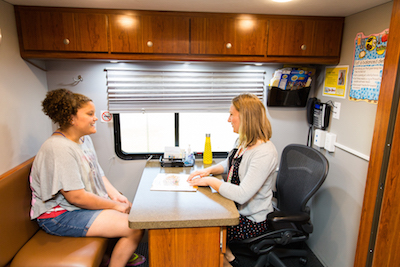
The Teen Xpress program is part of the Howard Phillips Center for Children and Families. We offer health care, mental health counseling, case management, and nutrition and dietary services to teens at select schools in Orange County. As the Teen Xpress mental health therapist, I meet with adolescents every day that are interested in changing their lives. Usually, the teens I work with want to make changes behaviorally or emotionally, but they often also express interest in making physical changes as well. It is not unusual to hear teens say that they want to lose weight.
-
How to Choose and Pack a Backpack to Be Sure It's Safe for Your Child
As a pediatric occupational therapist, I work with kids to help them become as independent and successful as they can be in their daily tasks and activities. This includes teaching kids to lift and carry items in the most efficient and safe ways for their bodies. Backpacks are a part of your child’s daily school routine, and choosing the right one can affect your child in ways you might not expect.
-
How you can protect your teen from substance abuse?
Over the last few years there has been an increase in the number of teens who are not only experimenting with drugs, but who have developed an addiction problem. According to statistics, about 2 million children between the ages of 12 and 17 are in need of treatment every year. Most teens do not experiment with drugs with the intention to become addicted to them. In fact, most teens experiment with drugs because of curiosity, peer pressure, or to feel good and have a good time. Unfortunately, many continue and many die because of it. As caregivers, it can be challenging to know what to do because addiction is brooded in secrecy and we might not find out until the substance use has become a substance abuse problem.
